Lutein and Zeaxanthin for Eyes After 50: Benefits, Best Foods and What the AREDS2 Research Really Shows
 By
Lutein and zeaxanthin are the two nutrients eye doctors mention most for aging eyes. Here is what they do, what the National Eye Institute's AREDS2 study actually proved, how to get them from food, and how to judge an eye supplement label before you buy.
- Lutein and zeaxanthin collect in the macula, where they filter blue light and protect retinal cells.
- In the NIH's AREDS2 study, a formula with 10 mg lutein and 2 mg zeaxanthin slowed progression to advanced AMD by about 25% in people who already had intermediate AMD.
- These supplements did not prevent AMD in people without it and did not help cataracts.
- Leafy greens and eggs are the best food sources. If you smoke or used to, choose formulas without beta-carotene.
What Are Lutein and Zeaxanthin?
Lutein and zeaxanthin are carotenoids, the natural yellow-orange pigments found in plants. Your body can't make them, so they come from food or supplements. Once absorbed, they travel to the eye and concentrate in the macula, the tiny center of the retina responsible for sharp, detailed vision.
Together they form what eye doctors call macular pigment. It works a bit like built-in sunglasses: it absorbs high-energy blue light before it reaches the light-sensing cells and helps neutralize the oxidative stress that builds up in a hard-working retina over a lifetime.
Lutein and Zeaxanthin in the AREDS2 Study: What It Proved
The Age-Related Eye Disease Studies (AREDS and AREDS2), run by the National Eye Institute (NEI), are the most important research on eye vitamins. The original AREDS formula used beta-carotene. AREDS2 tested replacing it with lutein and zeaxanthin.
| Nutrient | AREDS2 daily dose |
|---|---|
| Lutein | 10 mg |
| Zeaxanthin | 2 mg |
| Vitamin C | 500 mg |
| Vitamin E | 400 IU |
| Zinc | 80 mg (25 mg worked about as well) |
| Copper | 2 mg (to offset zinc) |
Source: National Eye Institute, About AREDS and AREDS2.
What the study found
- For people with intermediate AMD (or advanced AMD in one eye), the formula lowered the risk of progressing to advanced AMD by about 25%.
- Lutein and zeaxanthin safely replaced beta-carotene, which had been linked to more lung cancer in smokers and former smokers.
- It did not prevent AMD from developing in people who didn't already have it, and it had no effect on cataracts.
That last point matters. Many eye supplements are marketed as if they prevent eye disease. The best evidence says the AREDS2 formula helps a specific group: people whose eye doctor has found intermediate AMD.
Who May Benefit From Lutein and Zeaxanthin
- People diagnosed with intermediate AMD: ask your eye doctor about an AREDS2-matched formula. This is where the evidence is strongest.
- Adults over 50 who eat few leafy greens or eggs: a food-first approach or a general eye supplement can help fill the gap.
- Heavy screen users and night drivers who want to support macular pigment as part of everyday eye care.
Whatever your situation, a supplement doesn't replace regular dilated eye exams, which can catch AMD early when it matters most.
Best Food Sources of Lutein and Zeaxanthin
You can get a meaningful amount from food, especially if you build a few habits:
| Food group | Easy ways to eat more |
|---|---|
| Dark leafy greens (kale, spinach, collards, turnip greens) | A handful of spinach in eggs, soup or a smoothie; kale salad with olive oil |
| Eggs | The yolk is a well-absorbed source thanks to its natural fat |
| Corn, peas and broccoli | Frozen vegetables count and are easy to keep on hand |
| Orange and yellow peppers | Raw with hummus or roasted with dinner |
| Pistachios | A small handful as a snack |
Tip: lutein and zeaxanthin are fat-soluble, so eat them with a little olive oil, avocado, nuts or eggs. Cooking greens lightly can also help your body absorb them.
How to Read a Lutein and Zeaxanthin Eye Vitamin Label
Eye supplements vary a lot. Before you buy, check these five things:
- Are the doses printed? Look for exact milligrams of lutein and zeaxanthin. If they're hidden in a blend, you can't compare the product with the research.
- How do they compare with AREDS2? 10 mg lutein and 2 mg zeaxanthin is the studied amount.
- Is there beta-carotene? If you smoke or used to, the NEI recommends formulas without it.
- How much zinc in total? Adults shouldn't go over 40 mg a day from all sources unless a doctor advises it (NIH Office of Dietary Supplements). Add up your multivitamin too.
- What else is in it? Herbs like ginkgo can interact with blood thinners. Bring the label to your pharmacist if you take prescriptions.
Lutein and Zeaxanthin Safety Tips
- Food and typical supplement amounts are generally well tolerated.
- Very high carotenoid intake can give skin a harmless yellow tint that fades when you cut back.
- Combination eye formulas can contain other ingredients with interactions, so read the full label.
- See an eye doctor the same day for sudden new floaters, flashes of light, a shadow over your vision or sudden blurry vision. No supplement treats these.
Where VisiFlora Fits: A Lutein and Zeaxanthin Formula With Extras
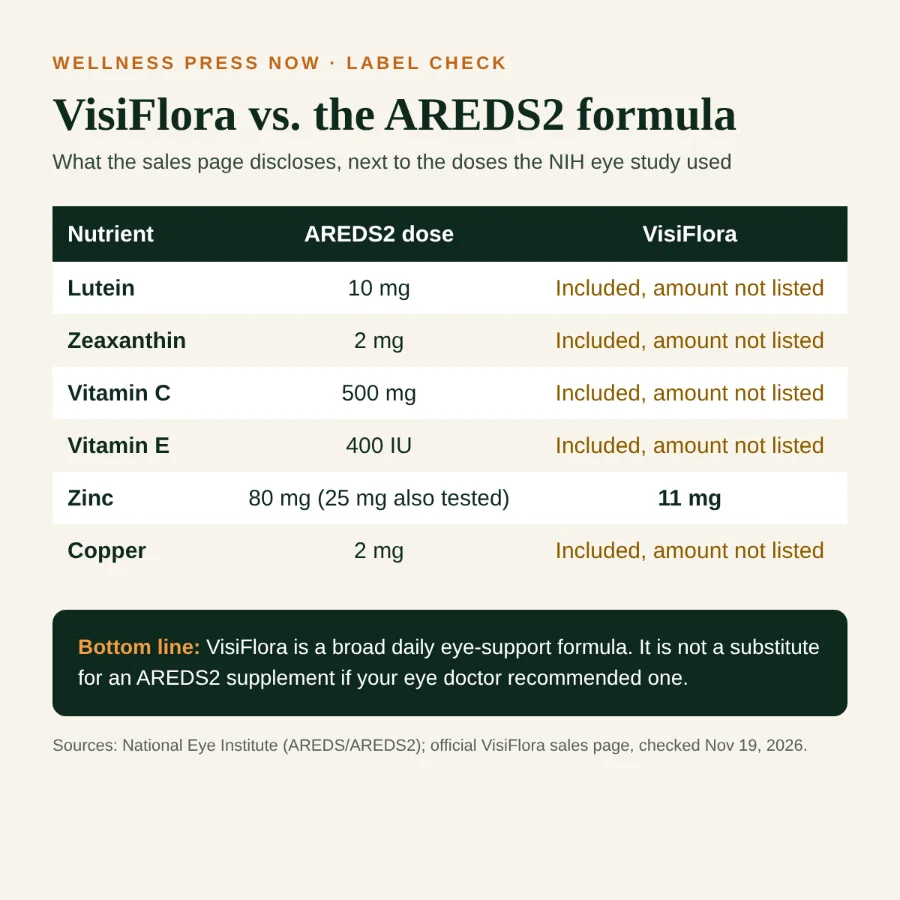
VisiFlora is a one-capsule-a-day eye supplement that includes lutein and zeaxanthin (from marigold) along with saffron, bilberry, astaxanthin, antioxidant vitamins and a “gut-eye” complex, 21 ingredients in all. It's a broad, convenient formula for everyday eye support.
Using the checklist above: VisiFlora publishes only its zinc dose (11 mg), so you can't match its lutein and zeaxanthin to AREDS2, and it contains beta-carotene, which smokers should note. It isn't a substitute for an AREDS2 formula your eye doctor recommended, but it may suit adults without AMD who want one simple daily capsule. We break down every ingredient, the safety notes, prices and the 60-day refund in our full VisiFlora review.
Lutein and Zeaxanthin FAQs
What do lutein and zeaxanthin do for your eyes?
They are yellow carotenoids that build up in the macula, the small center of the retina you use for reading, driving and seeing faces. There they form macular pigment, which filters blue light and acts as an antioxidant shield for retinal cells.
How much lutein and zeaxanthin did AREDS2 use?
The AREDS2 formula used 10 mg of lutein and 2 mg of zeaxanthin a day, together with 500 mg vitamin C, 400 IU vitamin E, 80 mg zinc and 2 mg copper. A lower zinc dose of 25 mg worked about as well.
Do lutein and zeaxanthin prevent macular degeneration?
The National Eye Institute says AREDS and AREDS2 supplements do not prevent macular degeneration from starting. They lowered the risk of progressing to advanced AMD by about 25% in people who already had intermediate AMD.
Do lutein and zeaxanthin help cataracts?
According to the National Eye Institute, the AREDS formulas had no effect on cataracts.
What foods are highest in lutein and zeaxanthin?
Dark leafy greens such as kale, spinach, collard and turnip greens are the richest sources. Egg yolks, corn, orange and yellow peppers, broccoli, peas and pistachios also provide them. Eat them with a little fat for better absorption.
Is it safe to take lutein every day?
Lutein and zeaxanthin from food and common supplement amounts are generally well tolerated. Very high carotenoid intake can turn skin slightly yellow, which is harmless and fades when you cut back. Ask your doctor if you have an eye condition or take several supplements.
Why was beta-carotene removed from AREDS2?
Some studies linked beta-carotene to a higher lung cancer risk in smokers. In AREDS2, former smokers who took beta-carotene had more lung cancer, so the NEI advises current and former smokers to use the AREDS2 formula with lutein and zeaxanthin instead.
Is VisiFlora an AREDS2 formula?
No. VisiFlora includes lutein and zeaxanthin among 21 named ingredients, but it publishes only its zinc dose (11 mg) and also contains beta-carotene. It is a broad daily eye-support formula, not a substitute for AREDS2 if your eye doctor recommended one.
Sources
- National Eye Institute: About AREDS and AREDS2
- NIH Office of Dietary Supplements: Zinc
- NCCIH: Herb-Drug Interactions
- Wellness Press Now: VisiFlora review · Supplement & Medication Checklist
This guide is for information only and is not medical advice. Talk with your eye doctor before starting any supplement. These statements have not been evaluated by the Food and Drug Administration.